


CHOSA Africa 2026 Sparks New Continental Push for Affordable Housing Through Cooperatives
 Naija CooperativeNews
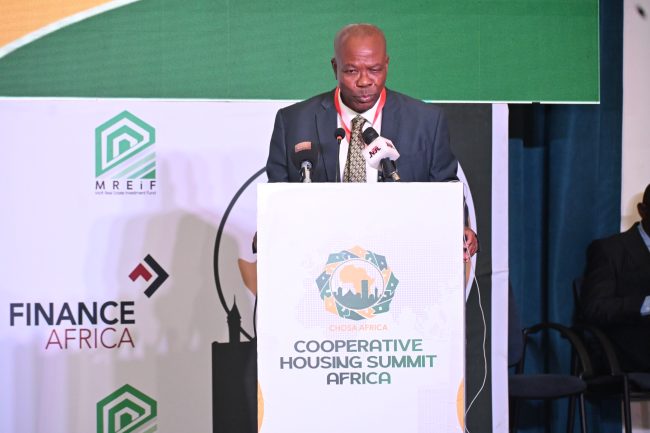
Abuja, Nigeria — Key stakeholders across Africa’s housing, finance, cooperative, technology, and development sectors converged at the Shehu Musa Yar’Adua Centre, Abuja, for the Cooperative Housing Summit Africa (CHOSA Africa) 2026, with a renewed commitment to leveraging cooperatives as a strategic vehicle for affordable housing delivery across the continent.
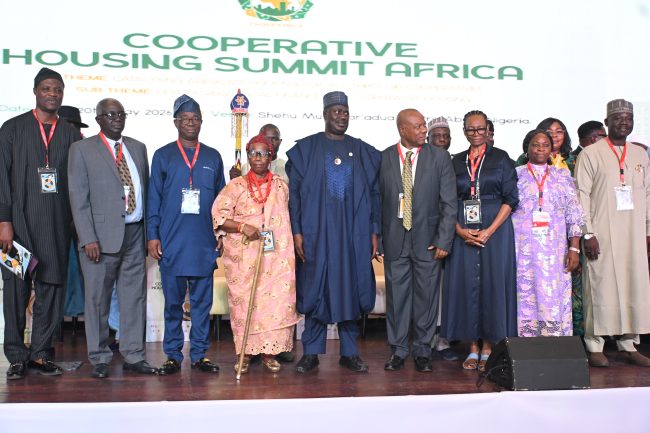
The two-day continental summit, held on 19th–20th May 2026, was themed “Catalysing Adequate Housing for All Through Cooperatives,” with a sub-theme focused on “Leveraging Digital Finance for Cooperative Housing.”
The summit brought together government officials, cooperative leaders, housing experts, financial institutions, fintech companies, developers, development partners, and international cooperative stakeholders to deliberate on innovative pathways for addressing Africa’s growing housing deficit through cooperative systems.
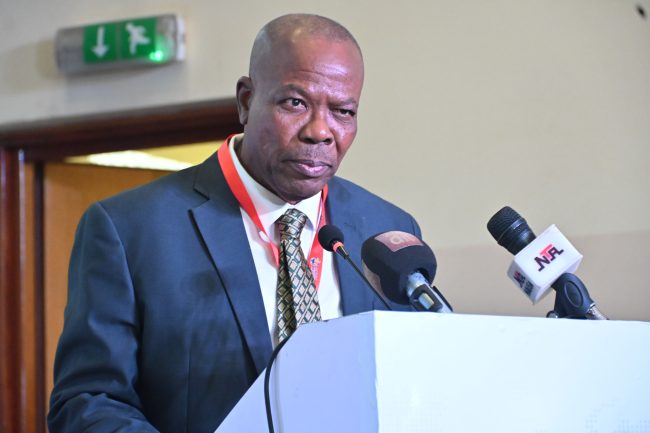
In his welcome address, Chairman of CHOSA Africa Group and President of the Cooperative Housing Federation of Nigeria (COHFON), Dr. Saheed Kayode Yemi Adelakun, described CHOSA Africa as a continental movement aimed at strengthening cooperatives as a veritable innovation for delivering decent and affordable housing to low- and medium-income earners across Africa.
Dr. Adelakun emphasized that affordable housing challenges require strong collaboration among governments, private-sector operators, financiers, developers, and end-users through a Public-Private-People Partnership (4Ps) framework. He further highlighted the role of digital housing finance platforms in promoting transparency, capital aggregation, financial inclusion, and housing access for people excluded from traditional mortgage systems.

Delivering the keynote ministerial address, the Honourable Minister of State for Agriculture and Food Security and Supervising Minister of Cooperative Affairs in Nigeria, Senator Dr. Aliyu Sabi Abdullahi, CON, described cooperative housing as one of Africa’s most practical pathways toward achieving inclusive and sustainable housing development.
The Minister stated that housing remains more than shelter, describing it as dignity, security, economic stability, wealth creation, and social inclusion. He noted that millions of Africans, particularly low- and middle-income earners, farmers, artisans, women, youth, Persons with Disabilities (PWDs), informal sector workers, and vulnerable communities continue to face severe housing challenges due to limited access to affordable financing and rising urban pressures.

Senator Abdullahi disclosed that the Federal Ministry of Agriculture and Food Security is advancing the Renewed Hope Cooperative Reform and Revamp Programme (RH-CRRP) to reposition Nigeria’s cooperative ecosystem into a modern, digitally-driven, transparent, and economically viable sector.
A major highlight of the summit was the Minister’s presentation on the proposed Cooperative Bank of Nigeria (CoopBank), designed as a specialized financial institution substantially owned by cooperatives and cooperators to provide accessible financing for cooperative societies, including housing cooperatives.
According to the Minister, the proposed CoopBank would support affordable cooperative housing finance, long-term housing development, cooperative mortgages, infrastructure financing, women and youth housing empowerment schemes, and inclusive access for Persons with Disabilities (PWDs).
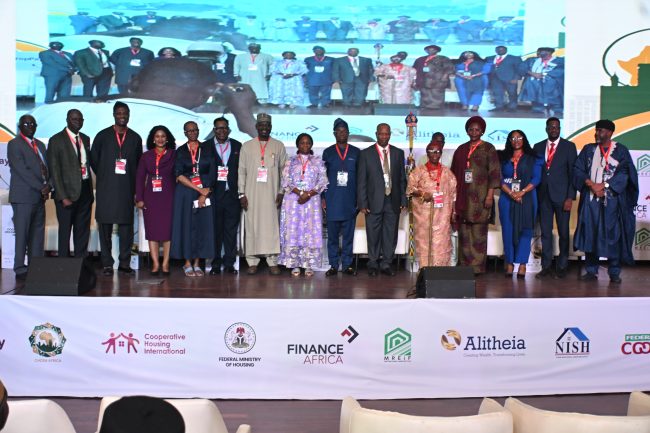
He also highlighted the role of digital transformation in the future of cooperative housing, unveiling plans under the National Cooperative Digital Architecture Platform (NCDAP), which includes innovations such as the Cooperative Verification Number (CVN), Cooperative Member Identification Number (CoopID), smart cooperative registration systems, digital mortgage automation, financial reporting systems, and integrated digital access channels for cooperators nationwide.
One of the summit’s major technical sessions featured a keynote presentation by Professor Timothy Nubi of the Centre for Housing and Sustainable Development, University of Lagos, titled “Breaking the Barriers: Making Cooperative Housing Work in Nigeria.”
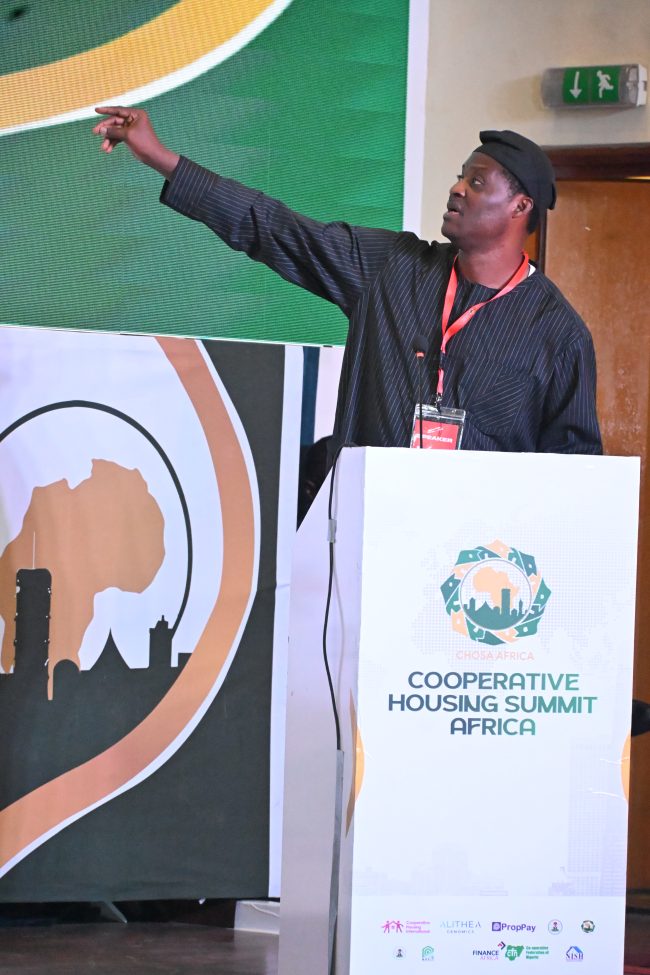
Professor Nubi revealed that Nigeria’s housing deficit currently ranges between 17 million and 22 million units, while nearly 80 percent of Nigerians remain excluded from formal mortgage financing systems.
Drawing lessons from successful global cooperative housing models in Kenya, Uruguay, the United Kingdom, and South Africa, he identified major barriers confronting cooperative housing in Nigeria, including land access bottlenecks, high financing costs, weak mortgage systems, poor governance structures, and fragmented policy frameworks.
He particularly pointed to Kenya’s SACCO model as a successful African example where cooperative finance systems have significantly replaced traditional mortgage markets for low-income populations.

At the end of the summit, participants adopted several strategic resolutions and action points aimed at strengthening cooperative housing delivery in Nigeria and across Africa. These included calls for improved cooperative governance structures, digitalization of cooperative operations, increased access to housing finance, stronger government support, affordable funding mechanisms, enhanced collaboration among cooperatives, and special land allocation policies for cooperative housing development.
Participants also emphasized the importance of continuous education for cooperative members, proactive housing savings schemes, and the adoption of innovative building technologies capable of reducing housing delivery costs.
The summit concluded with a strong call for African governments, development finance institutions, cooperative leaders, developers, fintech organizations, and private sector stakeholders to work collaboratively toward building inclusive, affordable, digitally-enabled, and community-driven housing systems across the continent.
As CHOSA Africa 2026 closed in Abuja, stakeholders expressed optimism that the summit would serve as a catalyst for a new continental movement capable of transforming cooperative housing into a practical and scalable solution to Africa’s housing crisis.