

FG Unveils Sweeping Cooperative Reforms, Targets Food Security, ₦5tn Sector Growth
 Naija CooperativeNews
Abuja – March 27, 2026
The Federal Government has unveiled a sweeping reform package for Nigeria’s cooperative sector, with a strong focus on restructuring, digitalisation, financing and enterprise development to drive food security, job creation and inclusive sustainable economic growth.

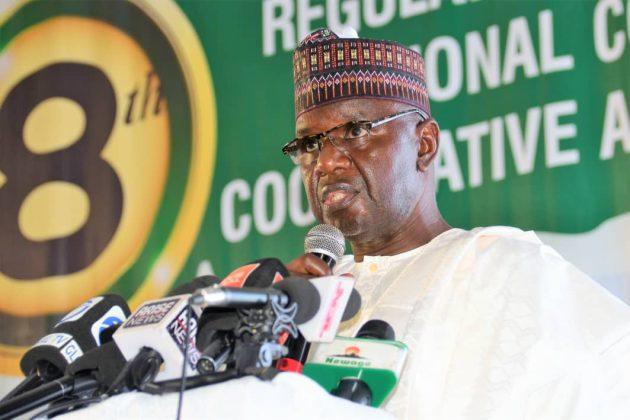
The reforms were announced at the 8th Regular Meeting of the National Council on Cooperative Affairs (NCCA), held from March 24 to 27, 2026, at the NICON Luxury Hotel, Abuja, under the theme: “Revitalising Nigeria’s Cooperative Sector: A Catalyst for Inclusive Growth and Sustainable National Development under the Renewed Hope Agenda.”
RH-CRRP: A New National Reform Framework for Cooperatives
At the centre of the government’s intervention is the Renewed Hope Cooperative Reform and Revamp Programme (RH-CRRP), designed to revamp and modernise the cooperative ecosystem, particularly within the agricultural sector.
Speaking at the meeting, the Minister of State for Agriculture and Food Security, Senator Dr. Aliyu Sabi Abdullahi CON, the Supervising Minister of Cooperative Affairs in Nigeria, described cooperatives as critical to Nigeria’s economic stability and food systems.
He said cooperatives play a central role in food production, aggregation, processing and distribution, making them indispensable to reducing import dependence and strengthening national food security.
“Revamping and modernising the cooperative sector is not optional; it is urgent and non-negotiable if Nigeria must feed itself, empower its citizens and expand prosperity,” the Minister stated.
According to him, the RH-CRRP will strengthen governance, improve access to finance and integrate farmers into structured agribusiness value chains.

Cooperative Bank, Smart Digital Registry Drive Reform
A major pillar of the reform is the proposed establishment of the Cooperative Bank of Nigeria, solely owned and managed by Cooperative Societies, aimed at unlocking affordable credit for farmers, agro-processors and rural enterprises that have historically been excluded from formal financing systems.
The government also announced plans to deploy a nationwide Cooperative Smart Registry and introduce a Cooperative Verification Number (CVN) and Cooperative Member Identification Number (CoopID) linked to the National Database, to all cooperative societies and their members in Nigeria, to enhance transparency, improve data management and expand access to financial services.

The Minister noted that these measures would improve productivity and traceability across agricultural value chains while positioning cooperatives to attract private investment and scale operations.
Enterprise Development and Agricultural Impact
The RH-CRRP framework places strong emphasis on enterprise development, including the establishment of localised agro-processing hubs, support for cooperative farming clusters and access to shared farm equipment.
These interventions, according to the Minister, are expected to reduce post-harvest losses, boost value addition and increase incomes for smallholder farmers across the country.
Strengthening Governance and Regulation
The reform programme also includes plans to review and update the Nigerian Cooperative Societies Act, introduce harmonised accounting standards nationwide and strengthen regulatory frameworks to improve accountability and investor confidence.
In his welcome address, the Permanent Secretary of the Ministry, Dr. Marcus Olaniyi Ogunbiyi, represented by the Director of Planning and Policy Coordination, Mr. Ibrahim Tanimu, said cooperatives remain central to rural transformation.
“Cooperatives are critical to empowering farmers, youth, women and Persons with Disabilities, while driving rural economic growth and agribusiness expansion,” he said.
He added that capacity building for cooperative leaders and institutional strengthening would be prioritised under the reform agenda.
Stakeholders Back Government Initiative
President of the Cooperative Federation of Nigeria (CFN), Mrs. Hannatu Mershak, reaffirmed the federation’s commitment to supporting the Federal Government in repositioning the sector for global competitiveness.

She described the cooperative movement as a powerful tool for grassroots mobilisation, poverty reduction and economic empowerment.
“In many rural and underserved communities, cooperatives are not just economic entities; they are lifelines,” she said.
Mershak noted that while progress has been made, the sector still faces challenges including weak governance structures, limited access to affordable finance, inadequate digital integration and low public awareness.
She stressed that addressing these issues would require bold reforms, innovation and sustained collaboration among stakeholders.

Aligning with National Priorities
Stakeholders, including ICOPRON National President Dr. Olubunmi Fajobi mni, ficp and the CFAN Executive Secretary Mr. Atrama Emmanuel at the meeting noted that the reform agenda aligns with the Federal Government’s Renewed Hope Agenda, particularly in advancing food security, job creation, capacity building, financial inclusion and sustainable development.

With over 370,000 registered cooperative societies across Nigeria, experts believe that effective implementation of the RH-CRRP could significantly expand the sector’s contribution to the national economy, with projections suggesting growth from about ₦1 trillion to over ₦5 trillion in asset base within the next decade.
The Road Ahead
The NCCA meeting concluded with a strong consensus on the need for coordinated implementation across federal and state levels, improved data systems and stronger institutional frameworks.

Analysts say the success of the reforms will depend on sustained political will, stakeholder collaboration and timely execution of key initiatives, particularly the Cooperative Bank and digital infrastructure.
If fully implemented, the reforms are expected to reposition Nigeria’s cooperative sector as a major pillar of economic development, capable of driving inclusive prosperity and transforming livelihoods nationwide.
The Host of the 9th NCCA Next Year
The Council unanimously agreed that Ogun State should be the host of the 9th National Council on Cooperative Affairs (NCCA) come next year.
The Chairman of the Council, Sen. Dr. Aliyu Sabi Abdullahi CON, the Supervising Minister of Cooperatives Affairs in Nigeria, officially presented the baton to host the 9th NCCA to the Honourable Commissioner of the Ogun State Ministry of Cooperatives and Community Development, in the person of Hon. Balogun Ademola who gladly accepted the hosting of the next NCCA on behalf of the Ogun State Government.

For authoritative updates on cooperative policy, reforms and sector performance, stay with CoopNews.ng.
